The Passive House Advantage
Architecture that protects your comfort, your health, and the future.
At Adapt Atelier, we don’t just design spaces that look exceptional—we engineer them to perform flawlessly.
A Certified Passive House represents the absolute gold standard in high-performance building science. By combining thoughtful, climate-specific architectural design with rigorous engineering, Passive House buildings reduce heating and cooling energy use by up to 90% compared to standard construction.
But the true luxury of a Passive House isn’t just found in the utility savings. It is felt the moment you step inside.
-
By drastically reducing a building's thermal demands, Passive House construction offers unmatched climate resilience. Your home requires a fraction of the energy to stay perfectly conditioned, decoupling your lifestyle from volatile energy markets and making a net-zero carbon future effortlessly achievable.
-
Traditional homes suffer from drafty corners, cold spots near windows, and fluctuating temperatures. A Passive House maintains a remarkably steady, uniform indoor temperature year-round. Because the entire building envelope is meticulously insulated and wrapped in a continuous, airtight barrier, the interior surfaces remain warm to the touch, even during sub-zero winters.
-
In a standard home, outdoor pollutants, allergens, and humidity infiltrate through unseen cracks in the walls. A Passive House breathes through a dedicated Energy Recovery Ventilator (ERV). This system continuously extracts stale indoor air and replaces it with a constant stream of fresh, filtered outdoor air—all while recovering the thermal energy of the air leaving the building. The result is an indoor environment with radically reduced dust, pollen, and CO2 levels.
-
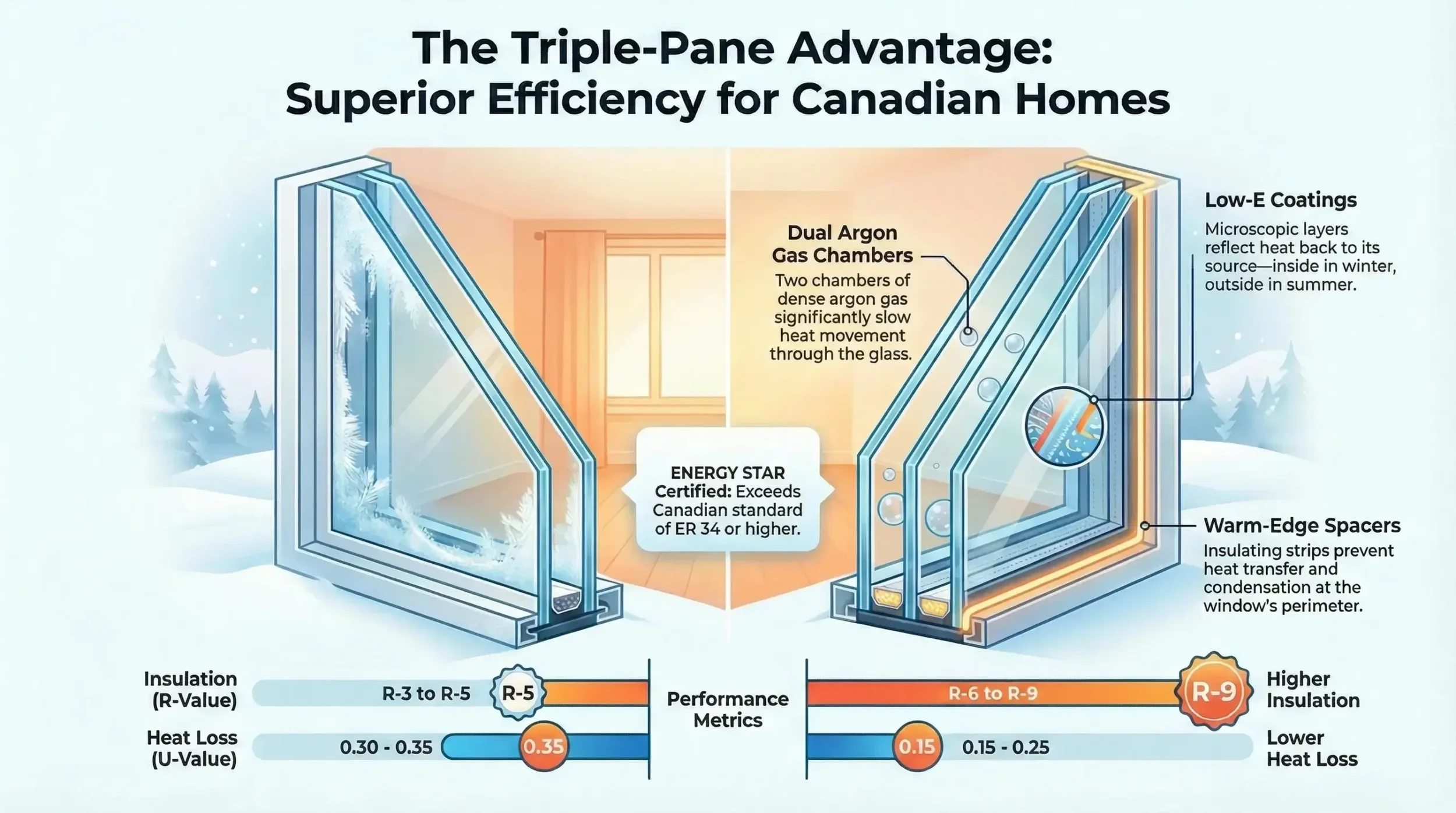
The same elements that make a Passive House incredibly energy efficient—triple-pane windows, thick continuous insulation, and an airtight envelope—also serve as an extraordinary acoustic buffer. The chaotic noise of city traffic, lawnmowers, and storms is virtually silenced, transforming your home into a quiet sanctuary.
-
Moisture damage is the silent enemy of building longevity. Through advanced vapor management and the elimination of thermal bridges (pathways where heat leaks through structural elements), Passive House structures prevent internal condensation. This protects the structural integrity of your home for generations, reducing long-term maintenance costs.
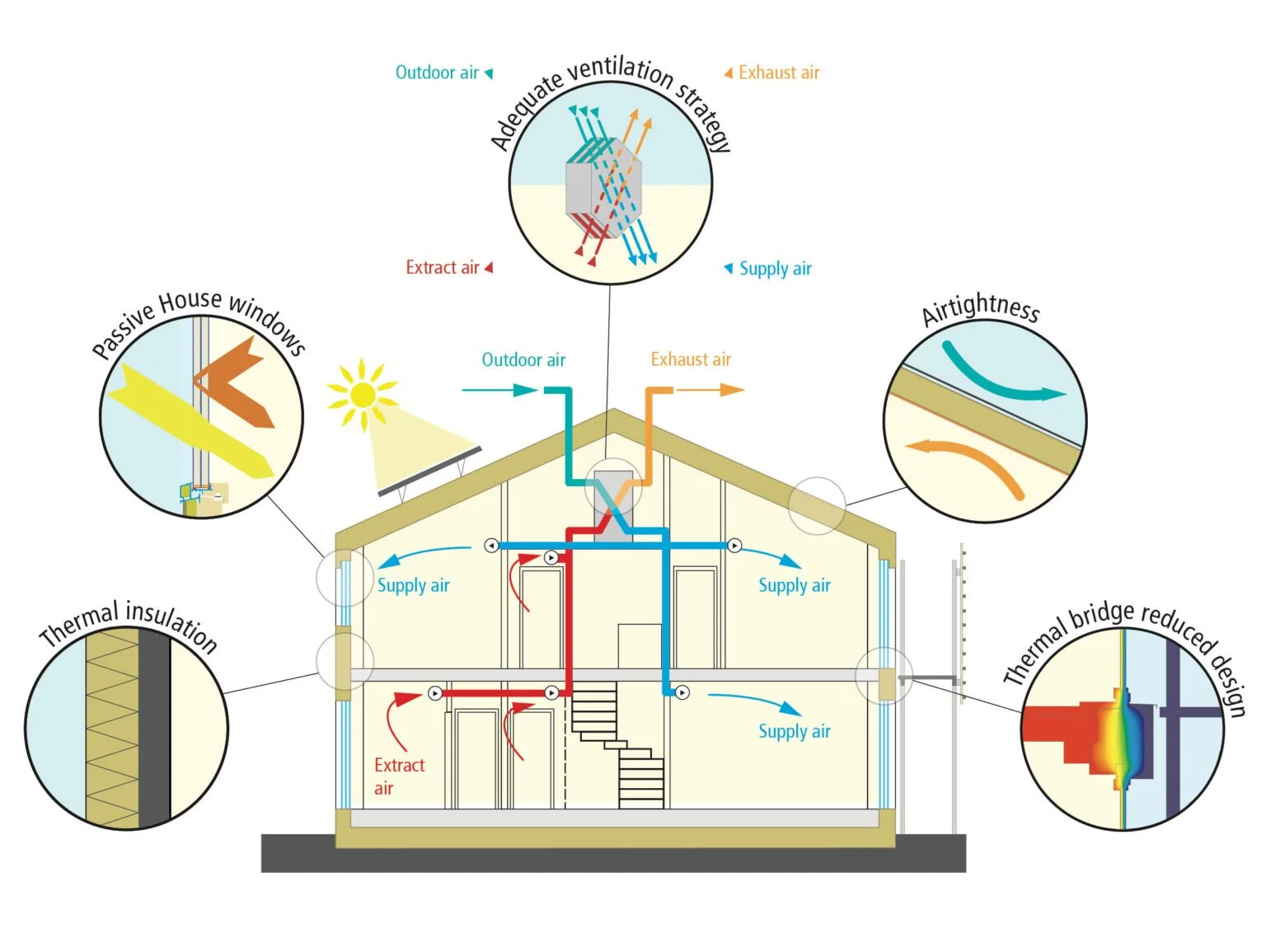
How It Works: The Five Principles
Every project we design at Adapt Atelier balances five strict physical principles to achieve certification:
Continuous Insulation: A seamless thermal blanket wraps the entire structure, eliminating cold bridges.
Airtight Construction: Vapor-permeable membranes prevent uncontrolled drafts and lock in conditioned air.
High-Performance Windows: High-efficiency, triple-paned glazing facing optimal solar orientations.
Balanced Ventilation: Continuous ERV/HRV systems that swap air without losing interior warmth or cooling.
Thermal Bridge-Free Design: Eliminating structural pathways that allow energy to bleed into the outdoors.
Passive house FAQ
-
While a Certified Passive House requires an upfront investment in high-performance components—such as triple-pane windows, enhanced insulation, and dedicated ventilation—the overall cost premium typically ranges between 3% to 8% more than conventional construction.
However, this initial premium is offset almost immediately. Because heating and cooling demands are reduced by up to 90%, your monthly utility bills drop drastically from day one. Furthermore, because the building envelope does the heavy lifting, you can install much smaller, less expensive mechanical heating and cooling systems. Over the lifecycle of the building, a Passive House is significantly more cost-effective than standard construction.
-
Yes, absolutely. You can open your windows whenever you like. A Passive House does not lock you away from the outdoors; it simply gives you total control over your indoor environment.
When the weather is beautiful, open your windows and enjoy the breeze. When the windows are closed—whether during a humid summer afternoon, a freezing winter night, or a high-pollen spring day—the balanced Energy Recovery Ventilation (ERV) system takes over. It continuously supplies fresh, filtered air to every room, ensuring your indoor air quality remains pristine even when the outdoors is less than ideal.
-
Yes. Transforming an existing building into a high-performance structure is entirely achievable through EnerPHit, the specialized Passive House certification standard designed specifically for retrofits.
While historical structures and existing site orientations present unique challenges, an EnerPHit retrofit focuses on systematically upgrading the building envelope—adding continuous insulation, establishing a robust airtightness layer, and introducing balanced mechanical ventilation. A deep energy retrofit not only slashes carbon emissions, but it also modernizes older buildings, eliminating drafts, dampness, and structural vulnerability for the next century.
-
Yes, and for many homeowners, a phased approach is the most practical path forward. The Passive House Institute offers a specific Phased EnerPHit Certification.
The key to a successful multi-year retrofit is meticulous master planning before any construction begins. We design a comprehensive, step-by-step roadmap to ensure that early updates—such as a garage or main roof replacement—are detailed correctly to connect seamlessly with future phases, like wall insulation or basement finishing. This prevents you from accidentally "locking out" future energy improvements and allows you to upgrade your property at a pace that aligns with your timeline and capital.
the bio based advantage
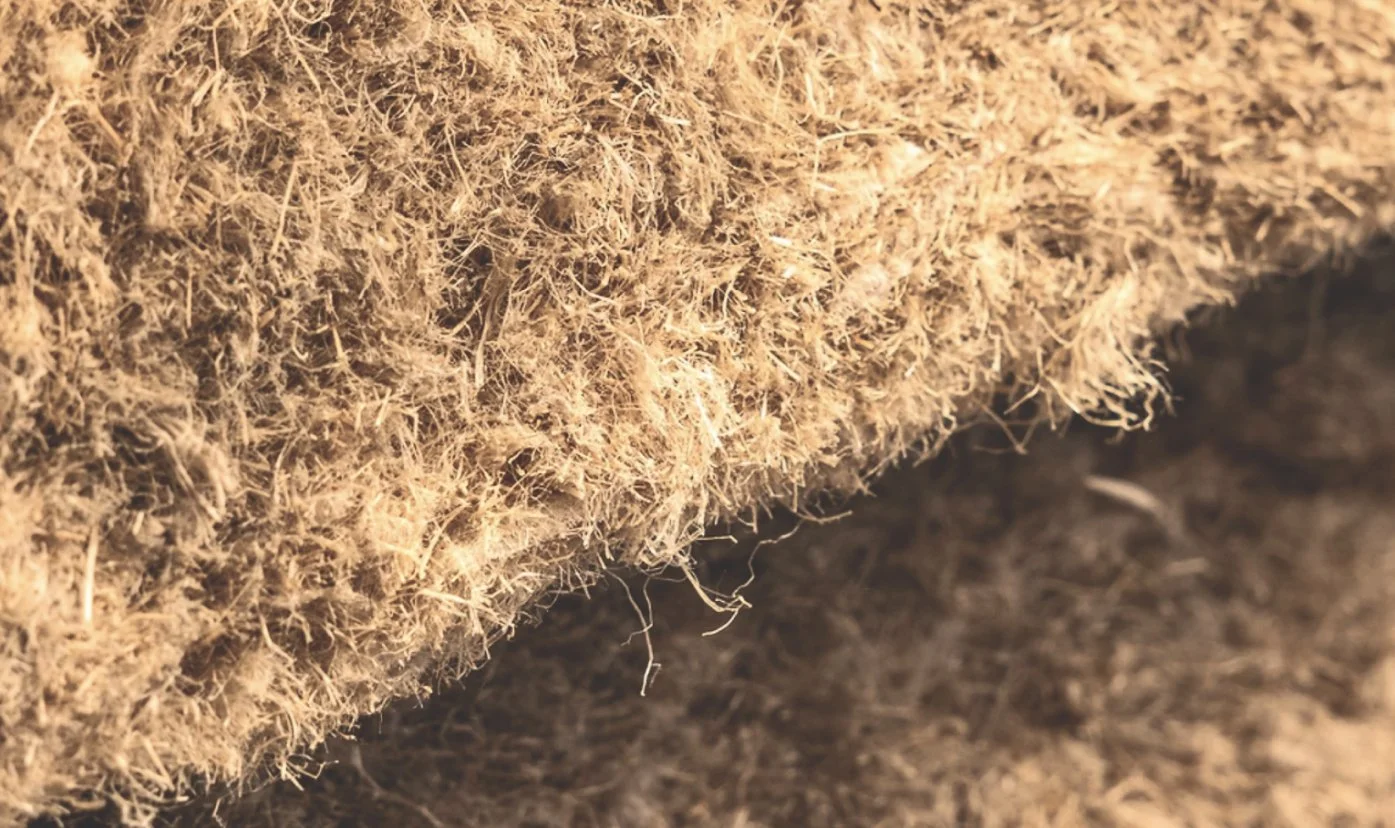
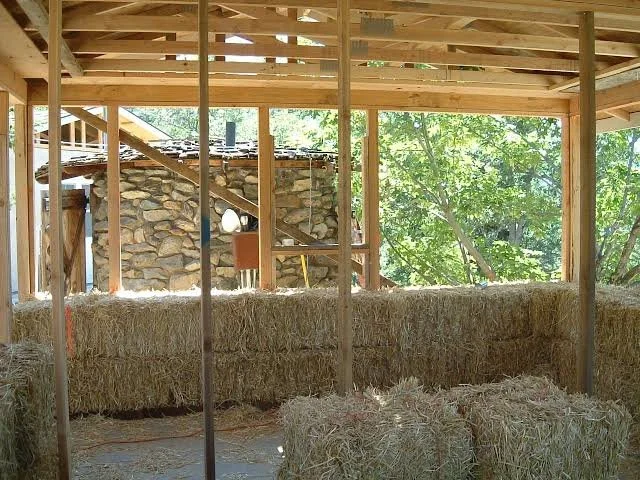
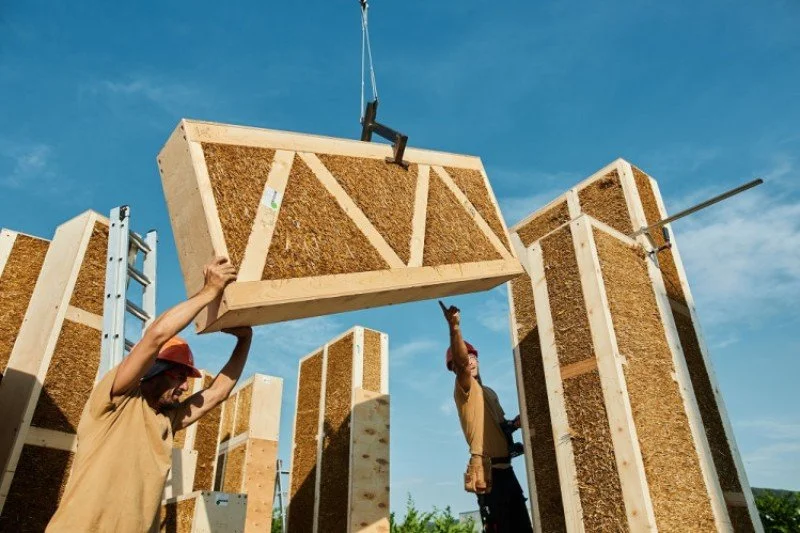
Building with bio-based materials like straw and hemp alongside low-VOC finishes transforms structures into high-performance, carbon-storing environments that prioritize occupant health and operational efficiency.
Carbon Sequestration & Low Embodied Energy: Agricultural byproducts like straw and hemp hurds capture atmospheric CO₂ during growth. Encapsulating them within wall assemblies permanently locks away carbon, drastically lowering a building's upfront embodied footprint compared to concrete, foam, or mineral wool.
Vapor Permeability & Moisture Regulation: Bio-based materials create "breathing" wall assemblies. Paired with lime or clay renders, hempcrete and dense straw bales buffer indoor humidity dynamically, preventing interstitial condensation, mitigating mold risk, and stabilizing internal temperatures through high thermal mass.
Superior Indoor Air Quality (IAQ): Eliminating off-gassing synthetic binders, formaldehyde, and volatile organic compounds (VOCs) ensures pristine interior air. Low-VOC renders, natural oil finishes, and bio-aggregates prevent hazardous air pollutants from degrading indoor environments.
Exceptional Thermal & Acoustic Performance: Compressed straw and hemp-lime composites deliver high thermal resistance (R-value) and continuous insulation that minimizes thermal bridging. Their fibrous density also dampens sound transmission, yielding quiet interior spaces.